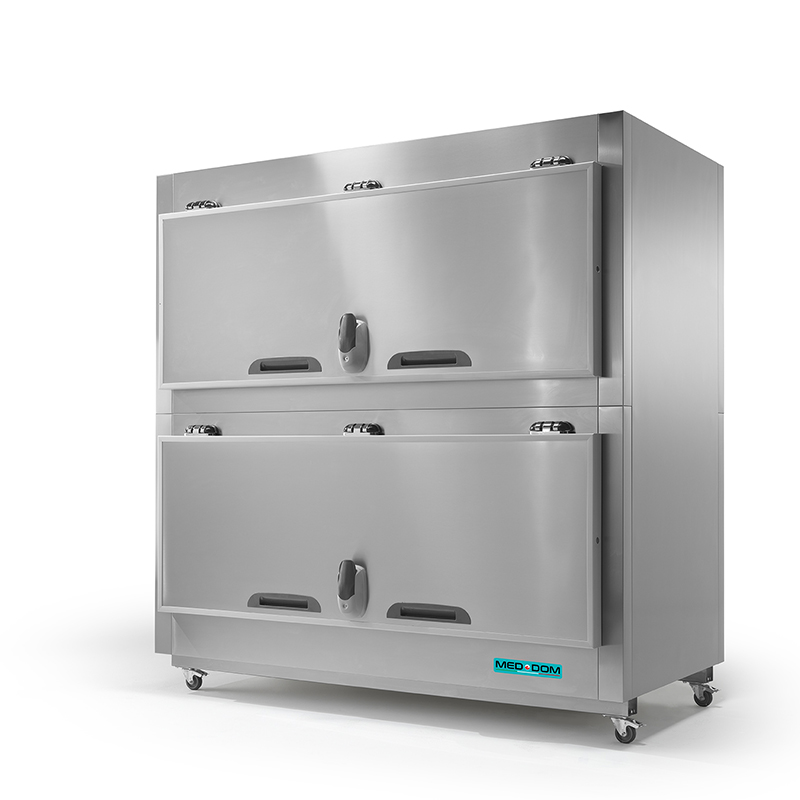
What Determines the efficiency of a professional refrigerated cell?
A practical guide to selecting high-performance systems and reducing operating costs
Energy efficiency is now one of the primary criteria when choosing a professional refrigerated cell. But what truly affects energy consumption? And how can you determine whether a system is engineered to ensure thermal stability and cost control?
This article clarifies the most important technical parameters.
1. Insulation: the core of efficiency
The factor that most significantly influences energy consumption is the thickness and density of the insulation.
High-density panels reduce thermal dispersion, improving:
- temperature uniformity
- reduced compressor cycling
- stability even with frequent door openings
- lower mechanical stress on components
This is the first feature to evaluate when comparing different refrigerated cells.
2. How much can you save with high-quality insulation?
Industry studies show that systems with high-performance insulation can improve energy efficiency by up to 35–40% compared to low-cost solutions using low-density panels.
The benefits are twofold:
- lower annual operating costs
- extended component lifespan
3. How to identify a truly efficient system
Here are three practical indicators:
- high-density panels and joints designed to prevent thermal bridges
- materials such as stainless steel that enhance hygiene and durability
- digital controls that reduce temperature fluctuations
Together, these elements ensure consistent performance and a more favorable TCO (Total Cost of Ownership).
Does lower energy consumption mean lower power?
No.
Efficiency is not about reducing power, but about delivering power only when needed. A well-insulated cell works less because it loses less cold, not because it generates less refrigeration.
High-quality insulation is the most effective investment for reducing consumption while improving performance.
MedDom technology integrates advanced solutions to ensure long-term reliability and energy savings.